
14 Sep Remedial Massage and Cupping Therapy: Understanding Stagnant and Dynamic Cupping
Remedial massage is a hands-on treatment designed to assess and treat muscles, tendons, ligaments, and other soft tissues that may be contributing to pain, restricted movement, or reduced function. It combines a range of manual therapy techniques to improve mobility, reduce muscle tension, promote recovery, and support overall musculoskeletal health.
One technique that may be incorporated into a remedial massage treatment is cupping therapy. Although cupping therapy has been practised for centuries, modern myotherapists and remedial massage therapists use it as an evidence-informed technique to complement manual therapy when clinically appropriate.
What is Cupping Therapy?
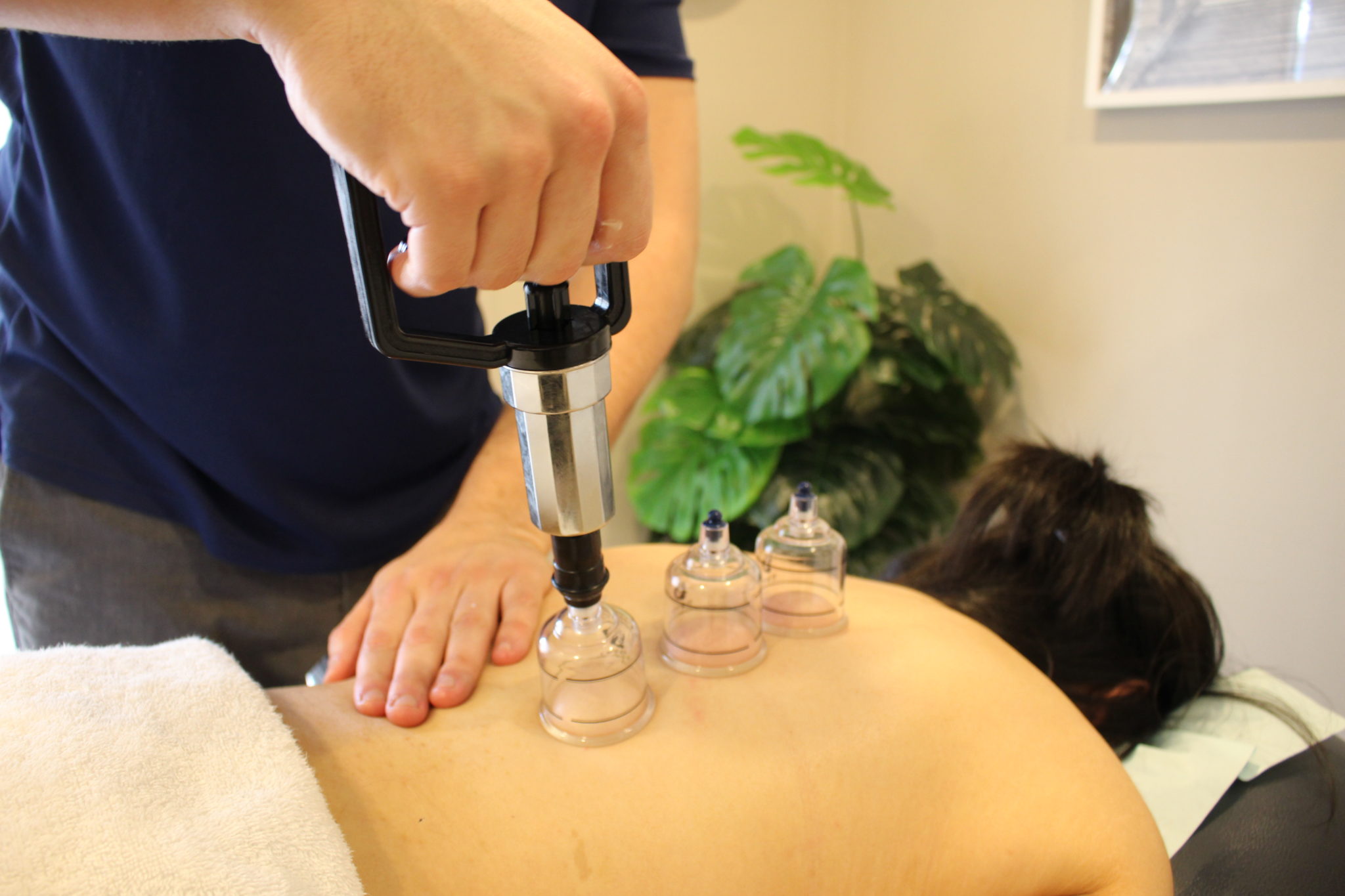
Cupping therapy involves placing specialised cups onto the skin to create negative pressure (suction). Unlike massage, which applies downward pressure into the tissues, cupping gently lifts the skin and underlying fascia. This may help improve tissue mobility, reduce muscle tension, and encourage healthy blood flow to the treated area.
The two main styles of cupping commonly used during treatment are:
- Stagnant (Static) Cupping
- Dynamic (Gliding) Cupping
Each technique has different clinical applications and may be recommended depending on your presentation and treatment goals.
What is Stagnant (Static) Cupping?
Stagnant cupping, also known as static cupping, involves placing cups over specific muscles or areas of restriction and leaving them in place for several minutes.
This technique is often used to target areas of persistent muscle tightness, trigger points, or fascial restrictions. The suction created by the cups helps decompress the tissue and may assist in improving circulation to the area while encouraging relaxation of tight muscles.
Potential Benefits of Stagnant Cupping
Stagnant cupping may help to:
- Reduce muscle tension and stiffness
- Improve local circulation
- Decrease myofascial restrictions
- Support recovery following physical activity
- Promote relaxation
- Improve range of motion in restricted areas
Following treatment, it is common for temporary red or purple circular marks to appear on the skin. These are a normal response to the suction rather than bruises caused by trauma and typically fade within several days.
What is Dynamic Cupping?
Dynamic cupping uses the same suction principles. But instead of remaining in one position, the therapist gently glides the cup across the skin using massage cream or oil.
This combines tissue decompression with movement, allowing larger muscle groups and fascial chains to be treated efficiently. Dynamic cupping is often incorporated into a remedial massage treatment to improve tissue mobility while providing a different sensation to traditional massage techniques.
Potential Benefits of Dynamic Cupping
Dynamic cupping may help to:
- Improve fascial mobility
- Reduce muscle tightness over larger areas
- Increase flexibility and movement
- Improve circulation throughout the treated tissues
- Support post-exercise recovery
- Complement traditional remedial massage techniques
Many patients describe dynamic cupping as feeling similar to a deep tissue massage but with less direct pressure on the muscles.
Is One Type Better Than the Other?
Neither technique is considered better than the other. Instead, stagnant and dynamic cupping each have their own clinical applications.
Static cupping may be more appropriate when targeting specific trigger points or areas of chronic tightness, while dynamic cupping is often preferred when treating broader muscle groups or improving overall tissue mobility.
In many cases, your remedial massage therapist or myotherapist may incorporate both techniques during the same appointment alongside massage, stretching, and other manual therapy techniques based on your individual presentation.
Is Cupping Right for Everyone?
Although cupping is generally considered safe when performed by a qualified practitioner, it is not suitable for everyone.
At Western Myotherapy, your therapist will complete a thorough assessment before treatment and discuss your medical history to determine whether cupping is appropriate. This treatment may not be recommended for people with certain skin conditions, bleeding disorders, anticoagulant medication use, acute infections, or other medical contraindications.
How Can Remedial Massage and Cupping Work Together?
When combined, remedial massage and cupping therapy can provide a comprehensive approach to managing muscle tension, movement restrictions, and recovery.
Every treatment is tailored to the individual and may include a combination of:
- Remedial massage
- Cupping therapy
- Trigger point therapy
- Stretching techniques
- Mobility exercises
- Education on self-management strategies
By addressing both muscle and fascial restrictions, this integrated approach aims to reduce discomfort, improve movement, and support long-term musculoskeletal health.
Experience the Benefits of Remedial Massage and Cupping at Western Myotherapy
Whether you are recovering from training, managing ongoing muscle tightness, or looking to improve your mobility, remedial massage and cupping therapy may help you move and feel better.
Our experienced therapists provide personalised assessments and evidence-informed treatment plans tailored to your individual needs. If cupping is appropriate for you, we will explain the technique, answer any questions, and ensure you are comfortable throughout your treatment.
Contact Western Myotherapy today on (03) 8001 2042 to discover how remedial massage and cupping therapy can support your recovery and overall wellbeing.
Sorry, the comment form is closed at this time.